

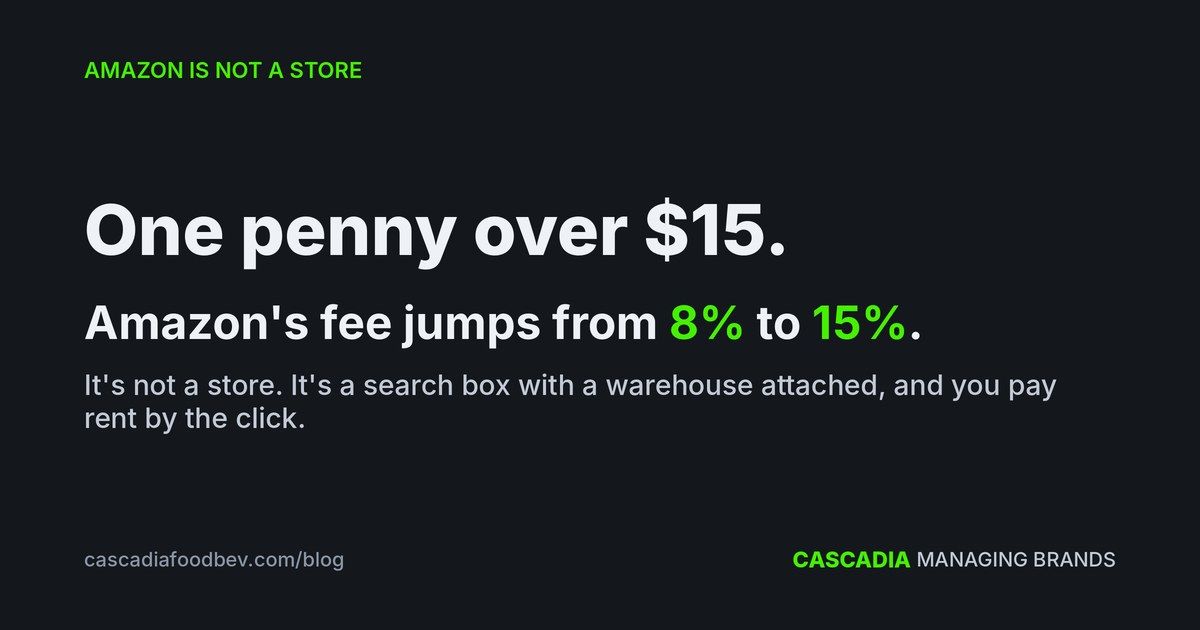
This article explains the real costs and challenges of selling products on Amazon, including fees, advertising competition, and discoverability struggles.
How to Make Your Product Go Viral
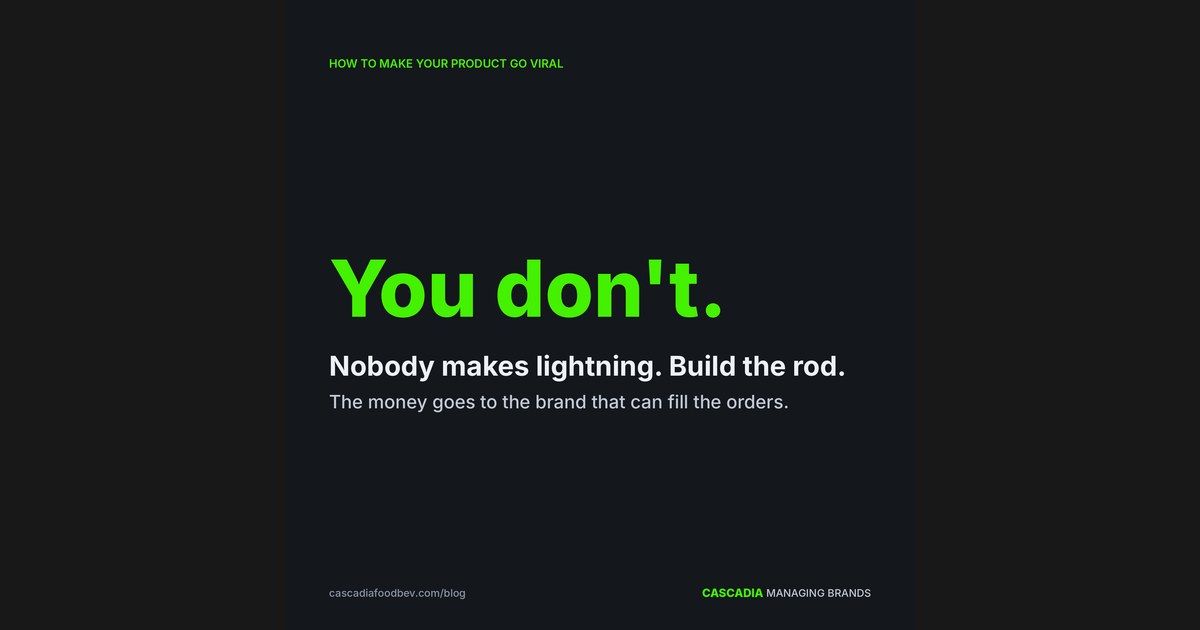
Short answer: you don’t. Long answer: here’s what you do instead.
Every week a founder asks me how to make their product go viral. Usually right after they’ve paid somebody to promise it.
There’s an entire industry now selling virality. Agencies, consultants, courses, a guy in a rented Lamborghini with a ring light. They’ll tell you there’s a formula: the hook, the trend, the sound, the three-second rule, post at 7:42 p.m. on a Thursday.
Here’s the formula. Ready? There isn’t one.
Nobody makes something go viral. Things catch it. And the brands that win aren’t the ones that manufactured the lightning. They’re the ones that were standing in the field holding a metal rod when it hit.
First, the vocabulary
George Carlin would want to start with the word itself, so let’s.
“Viral.” We took the word for a virus, the thing that makes you sick, spreads without permission and can’t be controlled, and turned it into the single most desired outcome in American marketing. Think about that. Nobody wakes up and says, “Today I’m going to manufacture a flu.” You can’t. You can wash your hands or not wash your hands. That’s the extent of your influence. A virus happens to you. That’s what the word means. The whole industry is selling you a contagion on a schedule.
“Content.” Content is what we now call anything a human being makes and puts on the internet. A song, a joke, a recipe, a confession, a video of your dog. All “content.” It’s a word that means “stuff to fill the container.” Nobody ever cried at a piece of content. People cry at stories. People buy from people.
“Engagement.” Engagement used to mean you were getting married. Now it means somebody tapped a heart with their thumb while sitting on the toilet. One of those is a commitment.
Exhibit A: the guy on the skateboard
In September 2020, a man named Nathan Apodaca was driving to work in Idaho when his car broke down. So he got on his longboard, grabbed a bottle of Ocean Spray Cran-Raspberry, put on Fleetwood Mac’s “Dreams,” and filmed himself cruising down the road, sipping juice and lip-syncing.
The video got more than 26 million views. It put a 1977 song back on the charts.
Ocean Spray didn’t plan it. Ocean Spray didn’t pay for it. Ocean Spray didn’t know it existed until the internet told them. Their marketing department had nothing to do with the single greatest marketing moment in the company’s recent history.
But here’s what Ocean Spray did do, and this is the lesson: they moved fast. They gave Apodaca a cranberry-red truck. Their CEO, Tom Hayes, got on TikTok and recreated the video himself. They didn’t send a legal memo. They didn’t schedule a meeting to discuss a response strategy for the third quarter. They acted like human beings who thought something was funny, and the internet loved them for it.
They didn’t create the lightning. They answered the phone when it rang.
Exhibit B: the cup that almost got discontinued
The Stanley Quencher is a forty-ounce tumbler. Not food, I know, but stay with me, because this is the best case study in the business.
By around 2019, Stanley had nearly given up on the Quencher. Then Ashlee LeSueur, cofounder of a shopping blog called The Buy Guide, who had loved the cup for two years, did something gutsy: she placed a wholesale order for 5,000 units and sold them to her followers. They sold out in days. When Terence Reilly became Stanley’s president in 2020, he did the smart thing. He didn’t fight it. He partnered with those women, built color drops around their audience, and let the customers lead.
According to CNBC, Stanley went from about $73 million in sales in 2019 to a projected $750 million in 2023.
Notice who discovered the product. Not the brand. A customer. Notice who decided to go all in. A customer, with 5,000 units of her own money. The brand’s genius was getting out of the way and then pouring gasoline on it.
Exhibit C: the chocolate bar everybody else got rich on
Now the cautionary tale.
In Dubai, Sarah Hamouda created a chocolate bar stuffed with pistachio cream and crunchy shredded pastry, inspired by a dessert called knafeh. She and her husband, Yezen Alani, started Fix Dessert Chocolatier making the bars by hand, around 25 a day. For a long time, they sold about one a week.
Then, in late 2023, influencers on TikTok started filming themselves breaking it open. The crack. The green ooze. The crunch. It was made for a camera. “Dubai chocolate” went around the world.
And here’s the problem: you can’t fly to Dubai to buy a candy bar. Within months, Lindt had a version. Aldi and Lidl had versions. Trader Joe’s, Walmart and Shake Shack had versions. In the U.K., Waitrose had to limit customers to two bars each. The original creator invented the product, and the entire global candy industry took the sales, because they had the factories, the trucks and the shelf space, and she had a small shop that started at 25 bars a day.
Same viral video. Completely different outcome. The difference wasn’t the content. It was the supply chain.
Stack it up
So let Lewis Black add it up.
You can’t schedule it. You can’t buy it. You can’t predict which video, which day, which creator, which flavor. Ocean Spray didn’t know. Stanley almost discontinued the product that made it. The woman who invented the most viral candy bar on earth watched everybody else sell it. And there’s a man in a Lamborghini right now telling your marketing director he’s got a system. He doesn’t have a fucking system. He has a ring light.
The verdict: what you actually do
You can’t make lightning. But you can build a lightning rod, and that part is common sense.
Make a product worth filming. Amanda Parker, TikTok Shop’s head of food, put it this way: “If there’s something interesting in the texture of a protein bar that can be pulled apart on camera, that’s going to be compelling.” That’s not a marketing note. That’s a product development note. The crack, the ooze, the color, the sound. If your product does something interesting in the first three seconds on camera, you’ve raised your odds. If it doesn’t, no hook will save it.
Get it into the right hands and let them talk. Seed creators and real fans who already love your category. Don’t script them. The minute it sounds like an ad, people scroll. Stanley’s best salespeople were customers, not employees.
Be ready to ship. Before you dream about going viral, ask the boring question: if 100,000 people wanted it next Tuesday, could you make it? Do you have a co-packer who can scale, packaging on hand, a distributor who can move it, a retail buyer you can call? The money from a viral moment goes to the brand that can fill the orders, not the one that made the video.
Respond like a human. When it happens, and it might, move in hours, not quarters. Say thank you. Send the truck. Get the CEO on camera. Nobody ever went viral by circulating a press release for approval.
And don’t bet the company on it. Build a business that works without the lightning: a good product, a fair price, real distribution, a shelf you can win. Then if lightning hits, it’s a bonus, not a bailout.
Possible? Absolutely. Easy? Never. But being ready for it is something you can actually control.
That’s what we do at Cascadia: build the rod, not sell you the lightning. If you want a team that’ll help you get the product, the supply chain and the shelf ready for the day your phone starts buzzing, give us a call.
Sources & Receipts
-
Nathan Apodaca’s “Dreams” video (more than 26 million views), Ocean Spray’s gift of a truck, and CEO Tom Hayes joining TikTok: Marketing Dive, “Ocean Spray goes viral with TikTok creator who put Fleetwood Mac’s ‘Dreams’ back on the charts,” October 2020; NPR, “TikTok Sensation: Meet The Idaho Potato Worker Who Sent Fleetwood Mac Sales Soaring,” October 11, 2020.
-
Stanley Quencher: The Buy Guide’s 5,000-unit wholesale order, Terence Reilly’s arrival as president in 2020, and revenue of about $73 million in 2019 rising to a projected $750 million in 2023: CNBC, “How a 40-ounce cup turned Stanley into a $750 million a year business,” December 23, 2023.
-
Fix Dessert Chocolatier: founded by Sarah Hamouda, bars handmade at about 25 a day, early sales of about one a week, viral spread on TikTok beginning with a December 2023 video by Maria Vehera, versions from Lindt, Aldi and Lidl: Wikipedia, “Dubai chocolate,” citing contemporaneous reporting.
-
Waitrose and Lidl limiting customers to two bars: The Grocer, “Dubai chocolate: how it started, and how retailers and brands have fanned the flames.”
-
Walmart, Shake Shack and Trader Joe’s selling Dubai chocolate: CNBC, “Walmart, Shake Shack and Trader Joe’s are selling Dubai chocolate,” May 31, 2025.
-
Amanda Parker quote on texture and protein bars: Food Dive, interview with TikTok Shop’s head of food, June 29, 2026.