


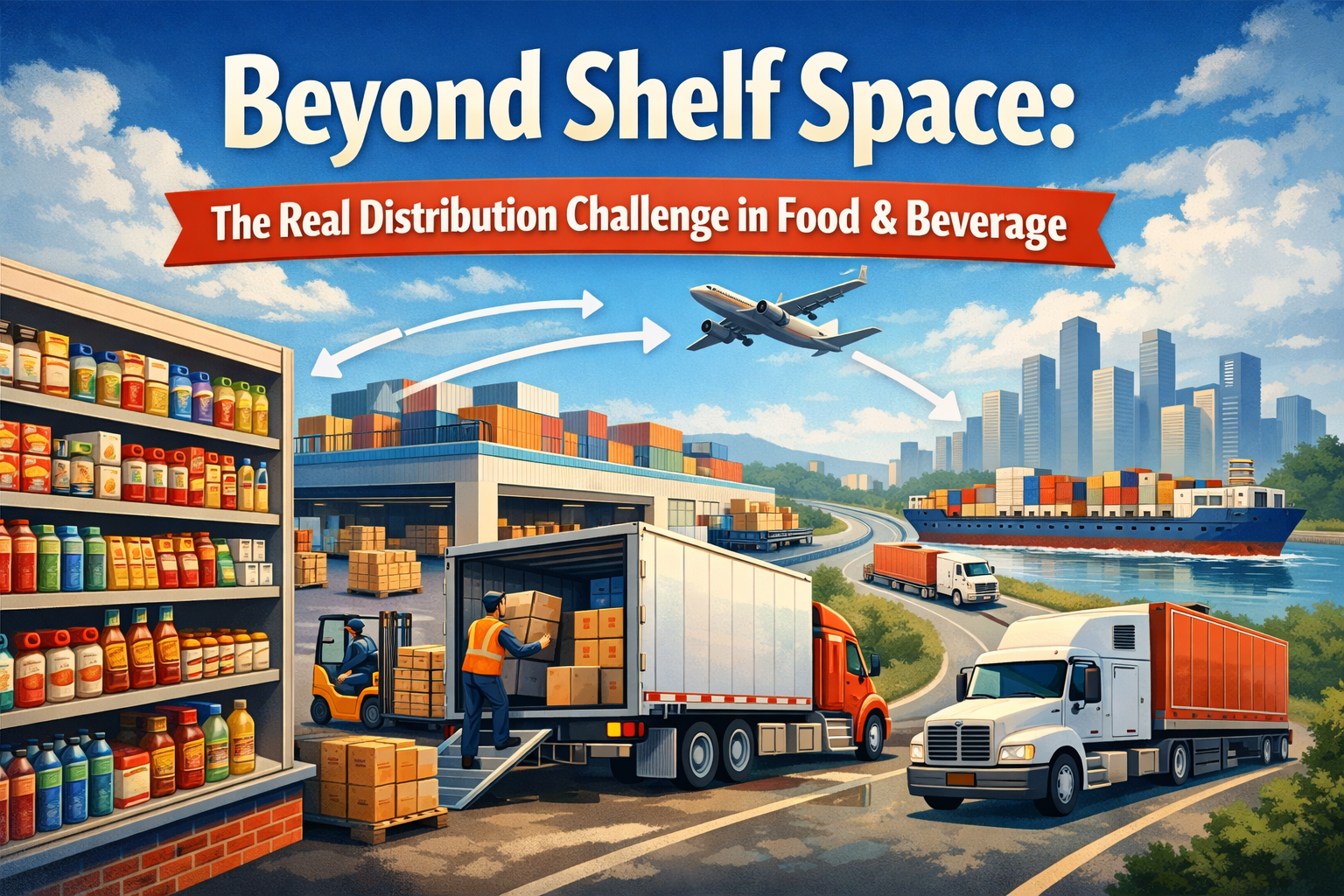
Explore the nuances of food and beverage distribution beyond just shelf space. Learn why true growth requires more than just national labels.
How Black Americans Saved Cadillac During the Great Depression:
The Untold Story of Luxury, Status, and Survival
When most people think of Cadillac, they picture gleaming chrome, white-wall tires, and the embodiment of American luxury. But few know that in the darkest days of the Great Depression—when General Motors was seriously considering shutting Cadillac down—it was Black Americans who kept the brand alive.
That’s not folklore. That’s fact.
This is a story of economics and consumer behavior, yes. But it is also a story of representation, resistance, and justice—whether General Motors intended it or not. Black Americans didn’t just save Cadillac with their wallets. They redefined what the brand meant—and, in doing so, forced an elite institution to reckon with a consumer it had long ignored.
So let’s be clear:
This is not a story of charity. It is a story of power.
And it is not only a story of business. It is also a story of social justice—economic justice earned, not given.
Cadillac in Crisis: The Depression’s Brutal Impact
When the Great Depression hit in 1929, the automotive industry was rocked. Demand plummeted across the board, but luxury brands were hit especially hard. Cadillac, known for its elite clientele—captains of industry, old money, and the occasional Hollywood elite—was suffering. By the early 1930s, Cadillac sales had cratered by over 84% from their pre-Depression peak. It was no longer just a drop in revenue; it was a question of survival.
General Motors executives debated shuttering Cadillac entirely. Why continue producing high-end automobiles when the market could barely afford Chevrolets?
The Segregated Market: Cadillac’s Unwritten Policy
Cadillac, like many other companies in the Jim Crow era, had a de facto policy of not selling to Black customers. This was not always written down, but it was enforced through the dealer network and the culture of the brand. Dealers were discouraged—even penalized—for selling to Black buyers.
This wasn’t just racism—it was flawed brand logic. Cadillac feared that if Black Americans were seen driving their cars, it would damage the brand’s prestige among white consumers. That tells you all you need to know about the brand’s assumptions in the 1920s.
But the market was changing.
The Rise of the Black Middle and Upper Class
Despite widespread discrimination, a thriving Black middle and upper class was emerging, particularly in Northern cities like Chicago, Detroit, New York, and Philadelphia. Black entrepreneurs, doctors, lawyers, Pullman porters, entertainers, clergy, and club owners—people like Madam C.J. Walker decades earlier—had real buying power. And they were aspirational.
For these consumers, Cadillac wasn’t just a car—it was a statement. It was a way of asserting dignity, success, and pride in a country that systematically tried to deny them all three.
But Cadillac dealers wouldn’t sell to them. So what did they do? They got creative.
How Did Black Americans Afford Cadillacs in the Depression?
Despite the overwhelming economic hardship of the 1930s, Black Americans who had money managed it differently:
- They paid in cash. Denied car loans and bank credit, they brought full payment upfront—making them high-margin, low-risk customers.
- They saved communally. Black fraternal organizations, church networks, and labor unions helped circulate capital and pool resources.
- They owned businesses. Many operated successful enterprises in beauty, entertainment, real estate, and personal services.
- They were excluded from other status symbols. With homeownership and club memberships often denied, high-end cars became one of the few visible, undeniable markers of success.
Owning a Cadillac wasn’t just about transportation. It was about claiming access to an elite brand that didn’t want you—but couldn’t survive without you.
The Entrepreneur Who Helped Open the Door: Don Lee
While Nicholas Dreystadt was fighting Cadillac’s policies from the inside, Don Lee was quietly changing things from the outside.
Who was Don Lee?
Born in 1880, Lee was a pioneering auto dealer and media mogul based in California. He built one of the largest Cadillac distribution networks in the Western U.S. and founded the Don Lee Broadcasting System, which operated stations like KHJ Los Angeles.
Lee was among the first to discreetly sell Cadillacs to wealthy Black customers—particularly entertainers and professionals in Los Angeles and the Bay Area—even when GM frowned on it. He showed that doing so did not tarnish the brand, but rather helped expand it.
What happened to him?
Don Lee died in 1934. His son, Thomas, inherited the empire, but lacked his father’s vision. The broadcasting division was eventually absorbed by CBS, and the auto dealerships fragmented. Lee’s quiet defiance laid a foundation, but history largely forgot his name.
The Man Who Changed Cadillac Forever: Nicholas Dreystadt
Who was Nicholas Dreystadt?
A German-born mechanic turned executive, Dreystadt led Cadillac’s service division. He noticed a strange pattern: a large portion of Cadillac service customers were Black, despite the company’s stance. They were getting Cadillacs—just not through official dealers.
In 1932, Dreystadt made a radical move: he crashed a General Motors executive meeting and made the business case for lifting the racial sales ban.
What happened to him?
Rather than being fired, Dreystadt was promoted to general manager of Cadillac in 1934. Within eight years, he had tripled the brand’s sales. He continued to rise within GM until his death in 1948. He’s still remembered in corporate circles—but rarely credited for integrating Cadillac’s customer base.
The Decision That Saved the Brand
Once the ban was lifted, Black customers began openly buying Cadillacs.
In cities like Harlem, Detroit, Chicago, and Philadelphia, owning a Cadillac became the ultimate symbol of Black excellence. Doctors. Funeral home directors. Entertainers. Clergy. Porters. Restaurateurs. They drove the car that had once excluded them—and they paid in full.
Cadillac didn’t just survive. It thrived—because of the Black community.
Status and Symbolism
To white elites, Cadillac was luxury.
To Black Americans, it was liberation on wheels.
They weren’t welcomed. So they claimed it.
They weren’t marketed to. So they made it aspirational anyway.
They weren’t given access. So they paid cash and showed up.
That is what economic resistance looks like.
That is what brand transformation looks like.
That is what justice through capitalism looked like—decades before the term existed.
A Lasting Legacy
Cadillac’s postwar rise to dominance—its transformation into the most prestigious American car brand—only happened because it embraced the very customers it once tried to exclude.
It is an unacknowledged truth of American business history:
Black Americans didn’t just help Cadillac. They redefined it.
What This Means for Food & Beverage and CPG Brands Today
This isn’t just automotive history. It’s a playbook for brands today.
Black Americans Are Trendsetters in Taste, Culture, and Brand Adoption
- Hennessy became synonymous with hip-hop luxury thanks to Black culture—long before it was marketed that way.
- Popeyes’ chicken sandwich went viral because of Black Twitter, not an ad campaign.
- McDonald’s “I’m Lovin’ It” was originally designed for Black consumers. Then it went global.
They Are More Brand Loyal—When Respected
- Fenty Beauty won undying loyalty with real inclusivity from Day 1.
- Carol’s Daughter was a cult favorite before being acquired, because it served unmet needs authentically.
- FUBU was more than fashion—it was ownership. It still matters today.
They Lead Trends. Then Get Excluded From the Profits
- Cîroc took off when Diddy rebranded it as aspirational Black luxury.
This is not an endorsement of Diddy—just a fact of brand history. - Yeezy’s success at Adidas reshaped sneaker culture.
This is not an endorsement of Kanye West—just a statement of commercial reality. - Flavors like Nashville hot, Cajun, sweet heat, and soul food now dominate snack aisles—yet rarely credit the communities they come from.
If You’re in CPG or F&B, Take Notes
Cadillac nearly died because it ignored a community with taste, pride, cash, and cultural power.
It lived because someone paid attention.
If your brand isn’t resonating with Black consumers—maybe the problem isn’t them. Maybe it’s you.
Final Thought
This isn’t folklore. It’s history.
Black Americans saved Cadillac.
Not with protests.
Not with petitions.
But with purchasing power—and vision.
They saw value in the brand even when the brand didn’t see value in them.
And they’ve been doing that for 100 years—across food, fashion, flavor, music, media, and mobility.
The only question is:
Are today’s brands paying attention—or repeating Cadillac’s near-fatal mistake?

