
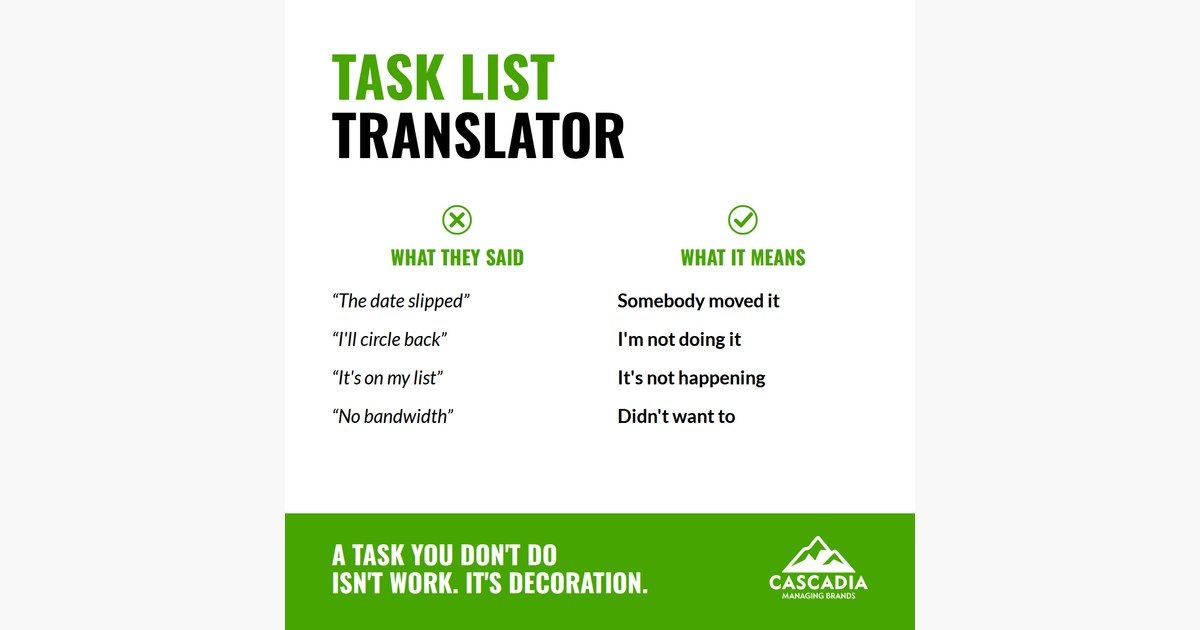
This article explains why lengthy to-do lists often hinder productivity and offers practical steps to manage tasks effectively and get things done.
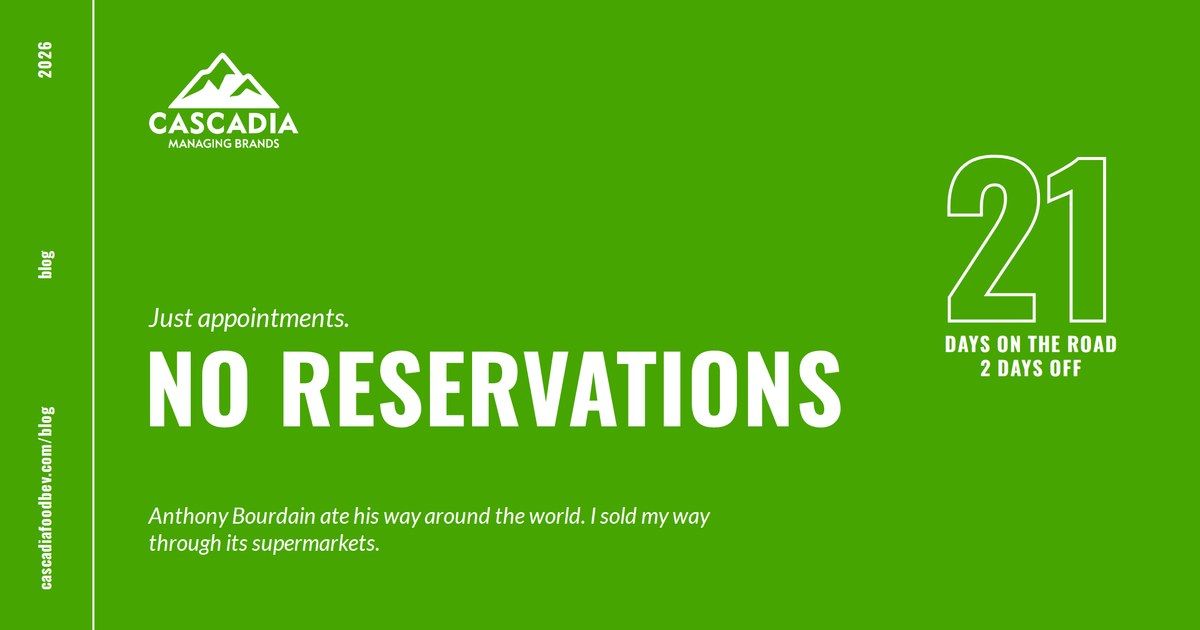
No Reservations. Just Appointments.
Anthony Bourdain ate his way around the world. I sold my way through its supermarkets. Somebody had to do the paperwork.
Anthony Bourdain got a television show, a book deal and millions of fans who wanted to eat noodles on a plastic stool in Hanoi.
I got Malarone.
There are two differences between us. He could cook. And he got paid to do it.
For most of my career, the job was to take an American food or beverage brand and get it onto the best shelves on the planet. Not the internet. Shelves. Real ones, in stores with doormen. You fly in, you sit in the buyer’s waiting room with a cooler bag of samples, and you convince a very busy person in a very good suit that the world needs one more drink.
One Asia trip ran twenty-one days with two days off. Another was three weeks in the Middle East. Before you go, the travel clinic turns your arm into a pincushion and hands you a box of Malarone, the anti-malaria pill, with a pamphlet of side effects that reads like a Stephen King anthology. Bourdain had a camera crew. I had a carry-on and a Tupperware of prototypes that customs wanted to discuss.
Spend twenty-one days on the road on any continent and you wake up every morning doing detective work. What country is this? What’s the money in my pocket? Is it Tuesday? Which buyer am I seeing at nine, and does he speak English, or am I doing the whole pitch in hand gestures? You read the hotel notepad for clues, like a man coming out of anesthesia.
Bourdain went looking for the soul of a country. I went looking for the buyer. Turns out they live in the same building.
First, a Word About the Word
Notice that no rich country on Earth will admit it has a grocery store.
The English have a Food Hall. The French have an Épicerie. The Japanese have a Depachika. Everybody else has a Gourmet Market, which is a grocery store that went to college. Nobody has a grocery store. A grocery store is where you buy toilet paper. A food hall is where you buy the feeling of never needing any.
And the vocabulary inside is worse. Nothing is selected anymore. It’s curated. Nothing is made. It’s crafted. The cheese isn’t old. It’s aged. The bread isn’t stale. It’s rustic. Same bread. Twelve dollars more. The word did the baking.
A grocery store sells food. A food hall sells adjectives. Food comes free with purchase.
Here’s what thirty years of calling on these places taught me: a great supermarket is a country’s autobiography, and you can buy it by the pound. It tells you who a country thinks it is, and what it will pay to prove it.
Pack a bag. Take your pill.
London: Groceries With a Coat of Arms
Start at Harrods, because Harrods would insist.
Charles Henry Harrod opened a small shop in 1849. In 1898 the store installed England’s first escalator, and the staff offered brandy to customers at the top. A moving staircase was a medical event. That’s where we started as a species. Qatar Holding has owned the place since 2010, and the Food Halls are where the English go to look at a ham the way the rest of us look at a Monet.
Then the drama. Mohamed Al-Fayed, the previous owner, took down the store’s royal warrants in 2000, then burned them in 2009 and called them a curse. A department store in a blood feud with the monarchy. That’s not retail. That’s Shakespeare with a cheese counter.
Waitrose went the other way. It holds a Royal Warrant from King Charles III, and its parent company says it’s the only royal warrant ever granted to a supermarket. It’s also employee-owned. So the guy stocking your yogurt is part owner, and the King signed off on the yogurt.
In America we check the expiration date. In England they check the lineage.
Marks & Spencer taught the world a lesson every brand I work with needs tattooed somewhere. In 2004 it ran an ad that said “This is not just food, this is M&S food,” and sales of the chocolate pudding in the ad jumped 3,000 percent. Same pudding. They just described it slower. It also sells a pink gummy pig named Percy that passed a billion sold by 2014. A pig. Gummy. Pink. A billion.
Selfridges and Harvey Nichols finish the tour. And like any aristocracy, they got married off to foreigners. Selfridges is now 60 percent owned by Thailand’s Central Group (hold that thought) and 40 percent by Saudi Arabia’s Public Investment Fund. Harvey Nichols went into administration in June and was bought by Frasers Group in August. “Administration.” That’s the English word for broke. They even have a nicer word for going under.
Paris: The Jam Has a Better Handbag Than You
La Grande Épicerie de Paris opened in 1923 as the food hall of Le Bon Marché, and it’s owned by LVMH. Same family as Louis Vuitton. So the apricot jam in your hand is a cousin of a four-thousand-dollar purse. You can feel it. The jam knows.
Across town, Galeries Lafayette has its own temple, now called Galeries Lafayette Le Gourmet. In Paris they don’t have aisles. They have galleries. They don’t have a deli guy. They have a curator.
The French don’t sell food. They sell the feeling of being the kind of person who buys it.
The Middle East: Heat You Can Lean On
Spinneys started in 1924 as a provisions department for Palestine Railways, near Alexandria, Egypt. A railroad commissary. It moved into Dubai in 1961, and in 2024 it listed on the Dubai Financial Market. From feeding train crews to trading on an exchange. That’s a hundred-year line extension.
Choithrams started when Thakurdas Choithram Pagarani opened a grocery store in 1943. In Sierra Leone. Then in 1974 the family opened in the UAE, and today it’s a Gulf institution, still family-run. A Dubai supermarket with roots in Freetown. Try explaining that to a category manager in Ohio.
You want to understand globalization? Skip the textbook. Read a Choithrams receipt.
Then there was Tunisia, which taught me humility in three acts.
Act one: I’m invited to speak at a conference. I land. My luggage does not. I’m in North Africa in the clothes I flew in, which by then had been through three airports and a lot of feelings.
Act two: I open the agenda and look for my name. I’m not on it. I’m the guest speaker who doesn’t exist. No suitcase. No slot. A man with a lanyard and nothing else.
Act three: I call my sponsor, Dr. Waheed, from Oman. He tells me not to worry about it. Which is exactly what you want to hear from a man who has his luggage.
Then the delegates from Palestine, Iraq and Syria stepped up and backed me to speak. An American beverage guy, jet-lagged, unscheduled and unwashed, and my campaign committee was Palestine, Iraq and Syria.
Holy shit. Diplomats have spent decades trying to get that part of the world to agree on something. All it took was me in a wrinkled shirt.
So I spoke. Same shirt. They loved it.
I didn’t have a suitcase. I had a coalition.
Dubai gave me the sequel. Another conference, and this time I was on the agenda and dressed for it. Suit. Tie. A man with his life together.
The driver dropped me at the wrong corner of the intersection. Not the wrong building. The wrong side of the right building. And in Dubai, the right building is roughly the size of a county. So I walked around it. Outside. In Dubai. In a suit.
By the time I found the door, my suit was as wet as a bathtub. Not damp. Not “glistening.” Bathtub. I didn’t walk into that conference. I was poured into it. And I went on, because the audience doesn’t care that your tie is now a washcloth.
Tunisia took my luggage. Dubai took my dignity. I kept the microphone both times.
Japan: Where the Railroad Owns the Grocery Store
Japan will ruin you for American retail. I say that with love.
Kinokuniya opened in 1910 as a fruit store in Tokyo, and its Aoyama store is widely credited as Japan’s first self-service supermarket. Before that, somebody handed you everything. Kinokuniya said, pick it up yourself. Revolution. Today it’s owned by JR East. The railway. In Tokyo the train doesn’t just take you to the grocery store. The train owns the grocery store.
Meidi-ya was founded in Yokohama in 1885 by Hakaru Isono, who had been Mitsubishi’s first overseas student in London. He came home and started supplying foreign ships. The import business in Japan began with a man who ate English food and thought, I can fix this.
Then the depachika, a mash of depāto, department store, and chika, basement. Go downstairs at Isetan in Shinjuku and you’ll find better pastry in the basement than most countries have on the ground floor. They wrap a single cookie like it’s evidence in a federal trial.
In Japan, the gift wrap is the product. The cookie is a formality.
Now the best meeting of my life.
I was presenting to a distributor in Japan. Long table. Dark suits. Halfway through my pitch, the oldest man in the room fell asleep. Not a nod. Asleep. And nobody woke him. They stopped me. Politely. And we waited, all of us, in silence, me standing there with my samples, until the senior man woke up on his own. Then they nodded, and I picked up where I left off.
In America, if the boss falls asleep in your pitch, you get a “let’s circle back” email. In Japan, the meeting doesn’t happen without him, awake or not. The room waits for the man whose yes counts.
They bought the product.
I’ve pitched presidents, CEOs and buyers all over the world. The best deal I ever closed was with a man who slept through half of it.
Then there was the trade show two years ago, when I decided, for the first time, not to bring an interpreter. Thirty years of experience. How hard could it be?
Here’s how hard. I’m deathly allergic to fish. In Japan. With no interpreter. That’s not a business trip. That’s a game show where the prize is staying alive. Every menu is a riddle. Every broth is a suspect. The fish isn’t just in the fish. It’s in the soup, the sauce and the seasoning on things that were never anywhere near a lake.
So I lived on 7-Eleven. And by God, 7-Eleven in Japan has good sandwiches. Soft bread, perfect egg salad, crusts cut off like somebody cared. In America, a 7-Eleven sandwich is a dare. In Japan it saved my life.
The interpreter isn’t a cost. The interpreter is the difference between a sales call and a hostage situation with a menu.
Korea: Bigger Than Yours
Shinsegae began in 1930 as a branch of Japan’s Mitsukoshi department store and is commonly called Korea’s first department store. It also issued Korea’s first credit card, in 1967. So Koreans shop at the store that taught them how to charge it.
Subtle, Korea is not. Shinsegae’s Centum City in Busan held the Guinness record as the world’s largest department store from 2009 to 2016. The Hyundai Seoul opened in 2021 with a garden growing in the middle of a mall. Lotte put an entire Eataly in its Jamsil food avenue. They didn’t import Italian products. They imported Italy.
Americans say “go big or go home.” Korea built the home and put a Guinness record in the basement.
Thailand: Where I Was on TV
Welcome to my personal Walk of Fame.
At Central in Bangkok, the Chirathivat family’s store, I shot an episode of a cooking show called Cooking for Fun, starring Nick Reitmeier. Somewhere out there is footage of me in a Thai supermarket, on camera, doing what Bourdain did, minus the leather jacket and plus a sales quota.
Central Chidlom opened in 1973 as the first Central store to sell imported goods in every department, and the food halls now carry the Tops Food Hall name. Remember the thought I told you to hold? That same family company now owns 60 percent of Selfridges in London and all of KaDeWe in Berlin. The people whose store I cooked in own a big piece of European luxury.
Just saying. I know people.
Central Food Hall was, in my book and plenty of other people’s, the number one supermarket in all of Asia. It’s where I saw the two greatest things I’ve ever seen in a grocery store.
The first was a square watermelon, flown in from Japan, about three hundred dollars. The Japanese grow them inside boxes so the melon takes the shape. And to hold that shape they’re picked before they’re ripe, which makes most of them basically decorative. Three hundred dollars for a watermelon you’re not supposed to eat. It’s not produce. It’s sculpture with seeds.
Somewhere a farmer in Georgia sells a round one for six bucks and wonders where he went wrong. He went round.
The second was the gift basket. In Thailand, people give food baskets for holidays and celebrations. In America we do it too. You get wicker, three pears, a summer sausage and a cheese that has never met a cow.
Central’s version was a Mercedes-Benz. Parked inside the supermarket. And the whole car was filled to the roof with the best food, liquor and wine in the world. Think Pétrus ’92. You didn’t give somebody a basket. You gave them a basket with a hood ornament and a wine cellar.
In America, the fanciest vehicle inside a supermarket is a motorized scooter with a low battery.
Thailand doesn’t have a gift basket. It has a gift garage.
Down the road at Siam Paragon, The Mall Group runs Gourmet Market with a service called “You hunt, we cook.” Pick your fish off the ice, hand it over, and a chef cooks it. In America, hand a stock clerk a raw fish and he calls security. (I’d have called an ambulance, but that’s my problem.)
Thailand figured out what American grocers are still holding meetings about. The store is the restaurant.
Hong Kong, Shanghai, Singapore: I Outlasted Two of Them
Great Food Hall opened in 2000 at Pacific Place in Hong Kong, and its 2019 relaunch brought it to more than 12,000 products and a cheese room with over 200 cheeses. Not a cheese case. A cheese room. With a door. The cheese has an office.
City’super opened in 1996 after Japan’s Seibu left Hong Kong, and filled the gap with Japanese precision and European prices.
Hong Kong is also where I became famous. Briefly. In a language I can’t read.
Newspapers in Taiwan and Hong Kong quoted me and called me “an expert.” The article was in characters. For all I know, the headline said “Confused American Stands Near Oranges.” There was a photo of me in a Hong Kong supermarket, looking very expert, with no idea what I was saying.
Meanwhile, back home, I can’t get BevNET to call me back.
In Hong Kong I’m an expert. In America I’m a voicemail.
Honest math: Three Sixty, the organic store at The Landmark, closed in 2013. City Shop, which fed Shanghai’s expats imported cereal for twenty-five years, closed its last stores in April 2024. I called on both. I’m still here.
I don’t close stores. I just outlive them.
In Singapore, Cold Storage has been around since 1903, when it was literally a cold storage depot for frozen meat. Its owner agreed to sell it to Malaysia’s Macrovalue in 2025. There’s one more great Singapore chain I called on, and I can’t remember the name. I won’t make one up. After enough twenty-one-day trips, the waiting rooms blend together. Same chair. Same cooler bag. Different time zone.
Latin America: Home
Carulla started in 1905 in Barranquilla, Colombia, and is one of the oldest supermarket brands in Latin America. It’s part of Grupo Éxito, controlled since 2024 by El Salvador’s Grupo Calleja. I spend a good part of my life in Colombia now, so Carulla isn’t just an account. It’s home turf.
In Brazil, Pão de Açúcar, named for the Sugar Loaf mountain in Rio, has been a São Paulo landmark for generations.
What the World Taught Me
The thought-leader part. Five things.
One. The store tells you what a country wants to become. London sells heritage. Paris sells taste. Tokyo sells precision. Seoul sells scale. Bangkok sells hospitality. The import aisle is a country’s wish list, priced per unit.
Two. The buyer is the same person everywhere. Different language, different suit, same question: why should I give you this space instead of the brand I already have? If you can’t answer it in Ohio, you won’t answer it in Osaka.
Three. Theater sells. The cheese room. The bow. The chef who cooks your fish. The escalator with a brandy. The rest of the world treats a grocery store like a stage. Too many of ours treat it like a warehouse with carts.
Four. Origin stories are gold. A railroad commissary. A fruit stand. A ship supplier. A shop in Sierra Leone. None of them hide where they came from. They sell it.
Five. Nothing lasts unless it moves. Two of my stores are gone. Two changed names. Three changed owners. The survivors kept reinventing.
Stack It Up
Stack it. All of it.
An escalator that came with brandy. A yogurt the King approved. A billion gummy pigs. Jam with a Louis Vuitton cousin. A Dubai chain born on a railroad and another born in Sierra Leone. A grocery store owned by a train. A cookie wrapped like a diamond. A newspaper expert in characters I can’t read. A boardroom that waited for a nap. A fish allergy in Japan with no interpreter, saved by 7-Eleven. No suitcase in Tunisia, a bathtub suit in Dubai. A three-hundred-dollar watermelon you can’t eat. A Mercedes filled to the roof with the world’s best wine, sold as a gift basket. And a Thai family business that went from my cooking segment to owning a chunk of London.
Twenty-one days. Two days off. Every shot the travel clinic had. And the pills. God, the pills.
I didn’t go around the world to eat. I went to sell. And I came back knowing more about how people actually live than any fucking guidebook will ever teach you.
Verdict
Bourdain made a fortune eating the world. I made a living selling it things to eat. Same trip. Different expense report.
Bourdain said the journey changes you. He was right. Mine turned me into a guy who can walk into any grocery store on Earth and tell you in about four minutes what’s working, what isn’t, and where the buyer sits.
That’s the job. That’s the value. If you’re a brand that wants to be on those shelves, you know where to find me.
Court adjourned. Pack the Malarone. And if you’re allergic to fish, pack a sandwich.
Sources & Receipts
-
Harrods (1849 founding; first escalator in England 1898 with brandy offered; Al-Fayed removed warrants 2000 and burned them 2009; Qatar Holding owner since 2010): Wikipedia, “Harrods.” en.wikipedia.org/wiki/Harrods
-
Waitrose Royal Warrant from King Charles III (May 10, 2024), described as the only Royal Warrant granted to a supermarket; employee-owned John Lewis Partnership: johnlewispartnership.co.uk/media-centre/latest-news/2024/19760
-
M&S Food (“This is not just food” 2004 ad, 3,000% pudding sales; Percy Pig 1992, over 1 billion sold by 2014): archive.marksandspencer.com/timeline/food/
-
Selfridges Group ownership (Central Group 60%, PIF 40%, October 2024): pif.gov.sa press release, 2024; Wikipedia, “Selfridges Group.”
-
Harvey Nichols (administration June 2026; acquired by Frasers Group August 13, 2026): theindustry.fashion/frasers-group-confirms-acquisition-of-harvey-nichols/
-
La Grande Épicerie de Paris (1923, Le Bon Marché, LVMH): lebonmarche.com; lvmh.com
-
Galeries Lafayette Le Gourmet: haussmann.galerieslafayette.com
-
Spinneys (1924 provisions department for Palestine Railways, near Alexandria; Dubai 1961; DFM listing May 9, 2024): Wikipedia, “Spinneys”; UAE Media Office, May 9, 2024.
-
Choithrams (Sierra Leone 1943; UAE 1974; family run): choithramsgcc.com
-
Kinokuniya (1910 fruit store; Aoyama store credited as Japan’s first self-service supermarket; owned by JR East since 2010): Wikipedia, “Kinokuniya.”
-
Meidi-ya (1885 Yokohama ship chandler; Hakaru Isono, Mitsubishi’s first overseas student in London): meidi-ya.co.jp company history.
-
Depachika definition: nippon.com, “Depachika.”
-
Shinsegae (1930 Mitsukoshi branch; Korea’s first department store; first Korean credit card 1967; Centum City Guinness record 2009–2016): Wikipedia, “Shinsegae.”
-
The Hyundai Seoul (opened February 2021); Eataly in Lotte World Mall: daebak.co Korean food hall guide.
-
Central Group (Central Chidlom 1973; food halls rebranded Tops Food Hall 2022; full control of KaDeWe Group 2024): Inside Retail Asia, Oct 28, 2022; WWD, 2024.
-
Gourmet Market (“You hunt, we cook,” Siam Paragon, The Mall Group): Monocle.
-
Great Food Hall (2000; 2019 relaunch, 12,000+ products, 200+ cheeses; A.S. Watson): aswatson.com
-
city’super (1996 founding after Seibu exit): Mingtiandi, 2020.
-
3hreeSixty (Landmark store closed Feb 25, 2013): Wikipedia, “3hreeSixty.”
-
City Shop (closed last stores April 2024, liquidation): Caixin Global, April 23, 2024.
-
Cold Storage (1903; sale of DFI Singapore food business to Macrovalue announced March 2025): Inside Retail Asia, March 25, 2025.
-
Carulla (1905 Barranquilla; Grupo Éxito controlled by Grupo Calleja since January 2024): Wikipedia, “Grupo Éxito.”
-
Square watermelons (invented 1978 by Tomoyuki Ono; grown in boxes; harvested unripe to hold shape, largely ornamental; retail prices up to about $200): Wikipedia, “Square watermelon”; Atlas Obscura.
-
Personal experience (trips, stores called on, Malarone, the Japan distributor meeting, the Japan trade show without an interpreter, the Tunisia conference and Dr. Waheed, the Dubai conference walk, the fish allergy and 7-Eleven sandwiches in Japan, newspaper quotes in Taiwan and Hong Kong, Cooking for Fun with Nick Reitmeier, the roughly $300 square watermelon and the Mercedes-Benz gift basket filled to the roof with top-end food, liquor and wine, both seen at Central Food Hall in Thailand; Central Food Hall as Asia’s top-rated supermarket is the author’s assessment): author’s recollection.